
Teaching place value is essential for building a solid math foundation in first graders. In this post, I will walk you through the exact lessons and activities I use to teach this crucial concept, ensuring your students grasp the importance of tens and ones. Let’s explore how to teach place value effectively!
You can watch this whole post over on YouTube or continue reading below.
Introduction to Place Value
Understanding place value is a fundamental math concept that lays the groundwork for many future mathematical operations. It is crucial for first graders to grasp the idea that the position of a digit within a number determines its value. For instance, in the number 23, the ‘2’ represents two tens, while the ‘3’ signifies three ones. This understanding not only aids in counting but also in performing addition and subtraction.
As we embark on this journey of teaching place value, we will explore various engaging lessons designed to help students internalize the concept. These lessons are structured to build upon each other, ensuring that students develop a deep, lasting understanding of place value.
Free Place Value Slides
These FREE slides and activities help guide your teaching of place value for first graders. This will sign you up to receive my newsletter. Unsubscribe any time.
Context and Curriculum Overview
In our first-grade classroom, we utilize the Math in Focus curriculum, which is based on the Singapore Math approach. This curriculum emphasizes a strong foundation in number sense and place value, beginning with numbers 1 through 10 and gradually expanding to larger numbers.
By the time we introduce place value, students have already been introduced to basic counting, addition, and subtraction. As we progress, we focus on numbers up to 40, allowing students to explore grouping numbers into tens and ones. This gradual progression helps ensure that students are not overwhelmed and can build their understanding step by step.
Throughout our unit on place value, we will cover seven main lessons. These lessons are designed to be interactive and engaging, allowing students to practice their skills in various ways, ensuring they not only understand the concept but can apply it in different contexts.
The Seven Main Lessons
- Lesson 1: Grouping Items into Tens and Ones
- Lesson 2: Identifying Place Value
- Lesson 3: Comparing Numbers
- Lesson 4: Comparing Sets Using Place Value Symbols
- Lesson 5: Adding or Subtracting 10 within Any Number
- Lesson 6: Ordering Numbers from Greatest to Least
- Lesson 7: Completing Number Patterns
Each of these lessons plays a critical role in helping students master the concept of place value. They will engage in hands-on activities, discussions, and practice that reinforce their learning in a fun and meaningful way.
Lesson 1: Grouping Items into Tens and Ones
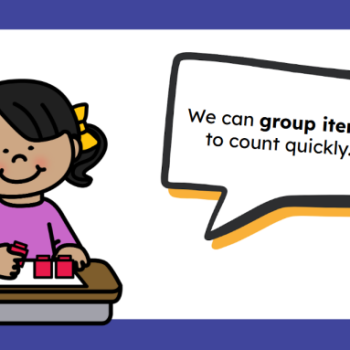
The first lesson is all about grouping items into tens and ones. This foundational skill is essential for helping students understand how to count efficiently.
To kick off the lesson, we start with a warm-up activity called “What’s the Number?” where students are encouraged to recognize groups of ten and count on from there. We then transition to hands-on practice, where students use counters to physically group items into tens and ones.
For this activity, I provide students with various small items, such as red and yellow counters. They are tasked with sorting these items into groups of ten and counting any leftover items as ones. This visual representation helps solidify their understanding of how grouping can simplify counting.

After the hands-on activity, we engage in a game called “Scoop and Group.” Students take turns scooping a handful of counters, grouping them into tens and ones, and recording their findings on a worksheet. This interactive game not only makes learning fun but also allows for peer collaboration as students discuss their strategies for counting.

Lesson 2: Identifying Place Value
In the second lesson, we delve deeper into identifying place value within two-digit numbers. The objective is to help students recognize the significance of each digit’s position.
We begin with a warm-up that involves comparing different sets of objects using the terms “fewer” and “greater.” This activity primes their thinking for understanding place value by reinforcing the idea of quantity.
Next, we gather on the rug with a place value chart and a variety of cubes. I call out two-digit numbers, and students use their charts to show the correct number of tens and ones. For instance, if I say “23,” they would place two tens rods and three unit cubes on their charts. This hands-on approach reinforces the concept that the position of a digit determines its value.

As we progress, I encourage students to share their observations. Questions like “Are 23 and 32 the same?” prompt them to think critically about the importance of digit placement. This discussion helps solidify their understanding of how place value works.
Lesson 3: Comparing Numbers
In this lesson, we will use our place value knowledge to compare numbers. The goal is for students to determine which number is greater or less than another.
We start with a warm-up activity where students use their knowledge of tens and ones to compare two-digit numbers verbally. I guide them through recognizing the importance of the tens place before moving to the ones place. This logical progression helps them understand the comparison process.

For the main activity, I provide students with sets of base ten blocks. They work in pairs to compare the quantities, circling the larger number and writing a comparison statement. This peer interaction encourages discussion and reinforces their understanding of place value.
As students practice, I circulate around the room, observing their strategies and providing support where needed. At the end of the lesson, we review what we learned and how we can apply it in future math activities.
Lesson 4: Using Place Value Symbols
In this lesson, we focus on using place value symbols to compare and order numbers. Understanding how to use these symbols correctly is crucial for students as they progress in their mathematical journey.
To start, I introduce the greater than (>) and less than (<) symbols. I emphasize that we will use the “dot method” instead of the traditional “alligator method.” This method involves drawing two dots toward the larger number and one dot toward the smaller number, which helps students visualize the comparison in a fun way.

Next, we practice comparing numbers using place value blocks. I write a few sets of numbers on the board, and we identify the tens and ones places together. For example, if we compare 43 and 34, we first look at the tens place. Since 43 has four tens and 34 has three, we can easily determine that 43 is greater.
For a hands-on activity, we play a game called “Best of 10.” In this game, students roll two dice: a green die for the tens place and a red die for the ones place. They then create a two-digit number and compare it with a partner’s number. This friendly competition reinforces their understanding of place value symbols.

After several rounds, students complete a worksheet where they compare numbers using the appropriate symbols. This practice solidifies their understanding and gives them the confidence to use place value symbols in future math activities.
Lesson 5: Adding and Subtracting 10
In our fifth lesson, we tackle the concepts of adding and subtracting 10 from two-digit numbers. This lesson builds on the foundation we’ve established in previous lessons and provides students with a practical application of place value.
We begin with a warm-up activity where I display two numbers, such as 33 and 25. I ask students to identify which number is greater and explain their reasoning. This primes their thinking for the main lesson and reinforces their understanding of place value.

Next, I introduce the concept of adding and subtracting 10 using place value blocks. I demonstrate how, when adding 10, the tens digit increases by one while the ones digit remains unchanged. For example, when adding 10 to 33, we change the 3 in the tens place to a 4, resulting in 43. Similarly, when subtracting 10 from 33, the tens digit decreases, leading to 23.
To reinforce this concept, I show a hundreds chart. We discuss the patterns we see, particularly how the tens place changes as we move up or down the chart. This visual aid helps students grasp the relationship between numbers more concretely.

For independent practice, I provide a worksheet where students practice adding and subtracting 10 from various numbers. This exercise not only reinforces the lesson but also allows them to work at their own pace.

Lesson 6: Ordering Numbers
In this lesson, we focus on ordering numbers using place value. Understanding how to arrange numbers from least to greatest or greatest to least is an essential skill for first graders.
We start with a brief review of the tens and ones places. I write several numbers on the board and ask students to identify the tens place first. This step is crucial as it sets the foundation for comparing multiple numbers.

Next, we practice ordering numbers. I present a set of numbers, and we work together to identify which number is the largest. For example, if we have 22, 30, and 35, we determine that 35 is the greatest based on the tens place. We then discuss how to arrange these numbers in order.
After our group practice, students engage in a fun activity where they use number cards to arrange themselves in order from least to greatest. This kinesthetic approach reinforces their understanding and makes learning engaging.

Finally, students complete a worksheet where they practice ordering numbers independently. This exercise helps solidify their understanding of place value and prepares them for future mathematical concepts.
Lesson 7: Completing Number Patterns
In our final lesson, we focus on completing number patterns, which helps students recognize sequences and understand how numbers relate to one another.
We begin with a discussion about patterns. I explain that students need to identify whether the pattern is increasing or decreasing. This understanding is key as they work through the exercises.

Next, I provide several examples of number patterns, such as 19, 21, 23, and 25. We analyze how these numbers are increasing by two. I encourage students to fill in the missing numbers in various patterns, reinforcing their understanding of addition and subtraction.
To make this lesson interactive, we do a “write the room” activity. Students move around the classroom, finding cards with incomplete patterns and filling in the missing numbers. This movement keeps them engaged and allows for collaborative learning.
After completing the activity, students work on a worksheet where they practice completing number patterns independently. This reinforces their learning and gives them the confidence to identify patterns in different contexts.

Review and Assessment
After completing all seven lessons, it’s essential to review and assess students’ understanding of place value. This step ensures that they can apply what they’ve learned in various contexts.
On review day, I gather the class and engage them in a quick recap of the key concepts from each lesson. We play some of the games we’ve enjoyed throughout the unit, such as “Best of 10” and “10 More, 10 Less,” to reinforce their learning in a fun and engaging way.
Once we’ve reviewed, I conduct a brief assessment to gauge their understanding. This assessment includes a mix of questions that require students to demonstrate their knowledge of place value, including comparing numbers, adding and subtracting 10, and completing number patterns.
By the end of this unit, students will have a solid grasp of how to teach place value. They will be equipped with the skills necessary to tackle more complex mathematical concepts in the future. Remember, teaching place value is about building a strong foundation, and these lessons provide the tools needed to help first graders succeed in their math journey.
If you haven’t grabbed them yet, you can get my free place value teaching slides below:


Where can I find the link to the slides you use for these lessons 1-7? These are perfect, but I can’t find them in your store.
Hi Jen! I just added them to the post, but you can also get them here: https://bit.ly/SJTplacevalueSLIDES